Tape It Off the Air: The 2026 Case for Radio-Born Mixtapes
The Song You Had to Wait For
You are driving home on a two-lane road outside of town, scanning the dial past a country station, a sermon, a high-school football broadcast. Then you catch it: a guitar riff you know, already eight seconds in. Your hand goes to the cassette deck. The blank tape is already loaded because you learned to keep one there. You hit record. The DJ talks over the second verse. You leave it in. That is the tape now. That is the artifact.
Recording songs off the radio used to be a default behavior, not a hobby. In the cassette boom of the 1980s and the mixtape heyday of the 1990s, catching a track off FM was how a lot of people built a library. You waited through commercials. You suffered through a pledge drive. You learned which college station played the good stuff after 10 p.m. The resulting tape was imperfect by design: clipped intros, DJ chatter, a little static when the signal drifted. Nobody minded. The imperfection was proof of the catch.
In 2026, that ritual is nearly extinct. Every song is a tap away, and the algorithm is happy to serve it clean. But clean is not the same as memorable. A radio-born mixtape is a document of a specific moment—a time, a place, a signal—and that is why it still matters.
Why Imperfection Ages Better
A streaming playlist is a list of files. A radio tape is a recording of an evening. The hiss between tracks is the sound of the room. The DJ's voice is a timestamp. The station ID that bleeds through at the end of side A is a return address. When you play that tape ten years from now, you will not just hear the songs. You will hear the weather on the drive home, the friend in the passenger seat, the fact that you had to pull over to flip the tape.
There is also a practical honesty to it. A radio tape cannot pretend to be curated by a machine. It was curated by a human being with a broadcast schedule and a playlist that you had to meet halfway. You did not choose every song. You chose to wait. That waiting is part of the listening experience, and it makes the songs stick in a way that a perfect queue rarely does.
The 2026 Radio Landscape Is Still There
The FM band is not dead. It is quieter, which is not the same thing. College stations still run specialty shows at odd hours. Community radio still has volunteers who bring their own records. NPR and its affiliates still carry music programming that does not sound like a focus group. Even commercial radio has drive-time blocks that a human being actually programs, not just a server.
The trade-off is that you have to look for it. The dial is less crowded, which means the good signals stand out more. A Sunday night jazz show on a public station. A Tuesday midnight punk block on a college frequency. A local oldies station that still takes requests. These are not nostalgia acts. They are live broadcasts, happening in 2026, and they are recordable.
A Practical Field Kit for Taping the Dial
You do not need much, but you do need the right pieces.
A decent FM tuner is the foundation. A vintage receiver with a line-out is ideal, but a modern portable with a headphone jack works fine. You want something with a manual antenna or a coaxial input—not a sealed unit that only gets the strongest signal. A cheap pair of rabbit ears can make the difference between a clean catch and a wash of static.
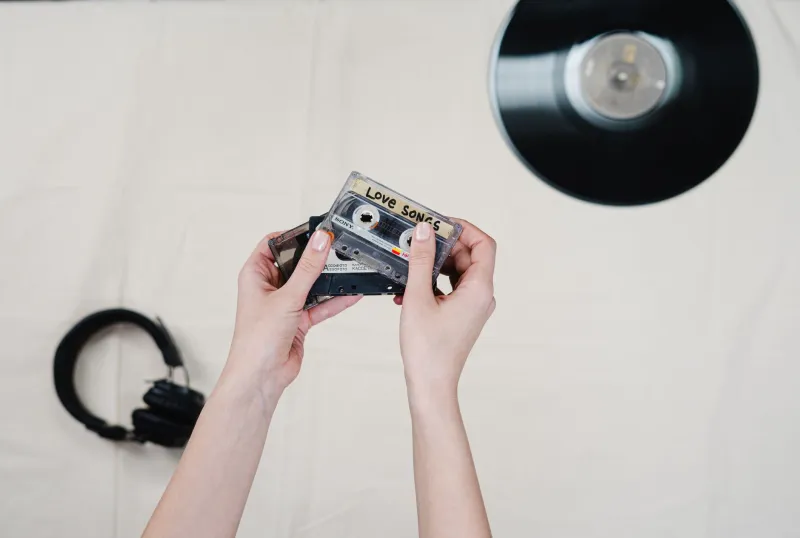
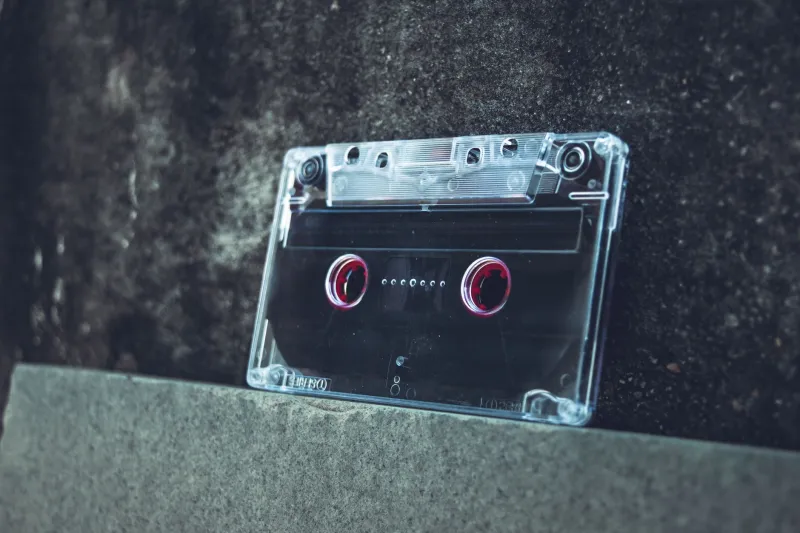
Blank cassettes are still being made, and Type I tapes are perfectly suited to radio recording. They are forgiving, they handle the occasional level spike, and they sound warm enough to flatter a broadcast signal. Type II is better if you want lower hiss, but for radio you almost want a little noise. It reminds you what you are doing.
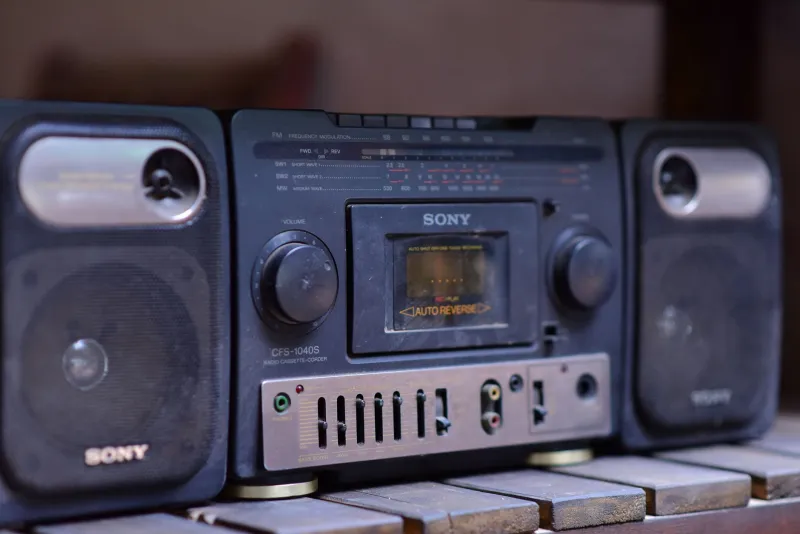
The cable matters. A 3.5mm to RCA cable will get you from a portable tuner into a cassette deck. If you are recording on a boombox, you are already set. Set your recording levels manually if you can. Automatic gain control will pump the commercials up and squash the songs down. Aim for peaks around -6 dB on the meter, and leave headroom for the DJ who suddenly gets excited.
Finally, keep a notepad and a pen near the deck. Write down the date, the station, the show, and the time you started recording. That information will be worth more than the tracklist later.
How to Make a Radio-Style Mixtape Today
You have two options. The first is the real thing: pick a show, tune in, and record a full side without stopping. Do not edit out the talk. Do not pause for commercials. Let the broadcast be the broadcast. You will end up with 45 minutes of a specific moment, and you can decide later which parts are keepers.
The second option is a hybrid. Record a block of radio, then use a second cassette deck to compile the best catches into a tighter tape. This is how people made radio tapes in the first place—they recorded the raw feed, then later dubbed the good parts onto a fresh tape. The hiss and chatter come along for the ride. You can fade out of a DJ who talks too long, but do not scrub out the station ID. That is the fingerprint.
Label the J-card with the station, the date, and a title like Sunday Night Signal or The 11 O'Clock Catch. The title does not need to be clever. It needs to be true.
The Payoff Is the Patience
A radio mixtape will never be as clean as a playlist. That is the point. The clipped intro reminds you that you were late. The DJ talking over the bridge reminds you that someone else was in the room. The hiss reminds you that the signal was traveling through the air, not through a cable.
In 2026, we have infinite access and very little memory. A radio tape is a small correction. It asks you to wait, to listen, and to accept what the air gives you. Tune in, hit record, and let the DJ talk. The tape will remember what the algorithm forgets.