The Feed Can Wait: Why Tape Collectors Are Choosing Curated Scarcity Over Infinite Choice
Streaming is very good at giving us more. More songs, more recommendations, more playlists that update themselves while we sleep. It is an engineering triumph and a cultural weather system. It is also exhausting. The renewed interest in cassettes and mixtapes is not a technical revolution. It is a small, stubborn pushback against the idea that listening should always be frictionless, infinite, and optimized by a machine.
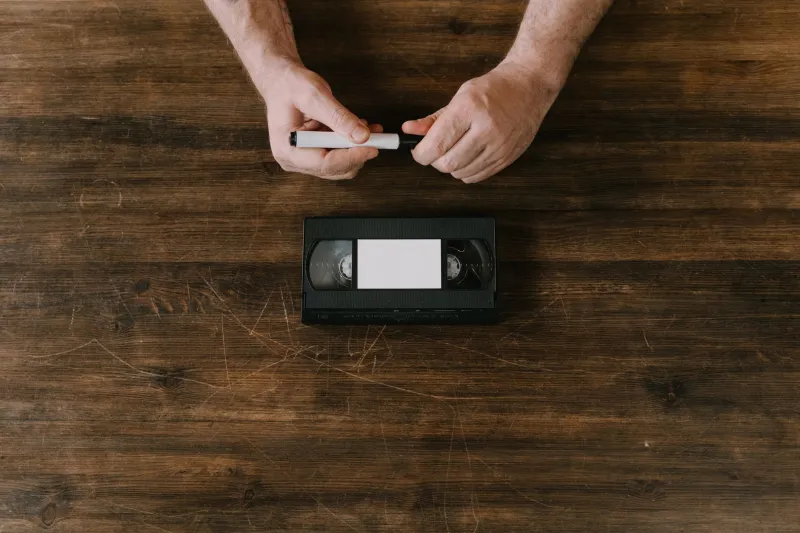
That is the quiet rebellion. It does not look like a protest. It looks like a person in a kitchen, writing a tracklist on a J-card with a Sharpie while a tape deck hums nearby. It looks like a Saturday afternoon swap at a record store. It looks like a limited cassette run of 100 copies that sells out because 100 people wanted to hold the same thing.
The Hidden Cost of Infinite Choice
Convenience has a price, and we usually pay it in attention. When every song is available and every skip is instant, listening becomes grazing. The algorithm learns what keeps us on the app, not what stays with us. It serves the next track, the next mood, the next slightly familiar variation. That is not the same as curation. It is retention dressed up as taste.
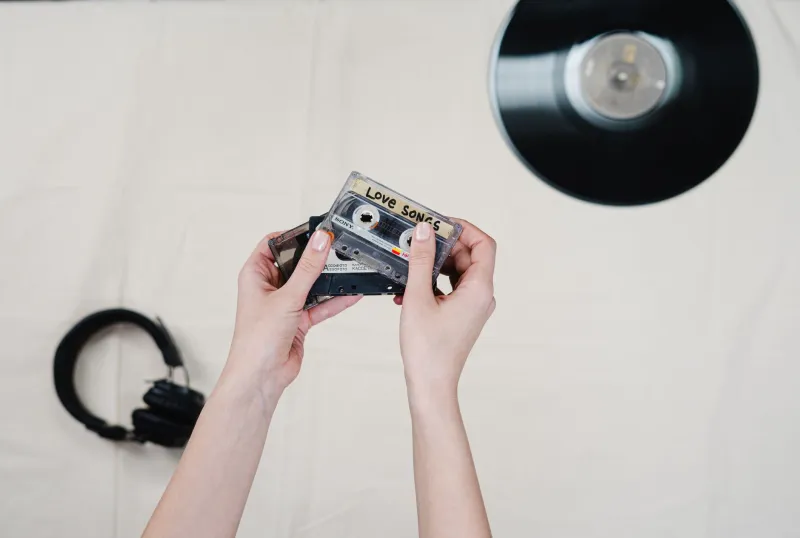
A cassette is finite. A C60 is 60 minutes. A C90 is 90. You cannot scroll it. You can fast-forward, but you have to mean it. The physical limit forces a sequence. The sequence forces a point of view. That is why a mixtape feels different from a playlist. A playlist can be a mood board. A mixtape is an argument.
A Tape Is an Argument, Not a Feed
Every mixtape is a small thesis. You choose the opener because it sets the tone. You choose the closer because it gives the side a shape. You decide whether the second song should soothe or sharpen the first. You leave a gap because the silence matters. Even if the recipient never knows why you made those choices, they can feel them.
That is human curation. It is not better because it is analog. It is better because it is bounded. The person who made the tape had to stop. They had to decide what did not fit. They had to live with the order. That kind of commitment is rare in a culture that treats every queue as infinitely editable.
The Tape Club Evidence
Look at what has been happening in the US over the past year or so. Mixtape clubs have popped up in cities where people want a reason to trade physical objects instead of links. Record stores have hosted cassette swaps alongside their usual vinyl bins. Independent labels have kept releasing limited cassette runs, often in editions of 50 or 100, with handmade J-cards and screen-printed shells. Bandcamp cassette editions remain a way for small artists to make something tangible without pressing a thousand records.
In 2025 and into 2026, these scenes have stayed small, and that is the point. They are not trying to beat streaming at scale. They are trying to create a different scale. A scale where you know the person who made the tape, or at least you know they had a reason. A scale where the object has a story before you even press play.
The Ritual Beats the Recommendation
The ritual is the product. You write the J-card. You press record. You watch the levels. You flip the tape. You hear the hiss before the first song. You notice the side break. You cannot skip the intro without committing to the skip. That sounds like a limitation, and it is. But limitations can be a form of care.
Collectors talk about the flip for a reason. The flip is the moment the tape asks you to participate. It breaks the illusion that music is just background radiation. It turns listening into an event, even if the event is just you on a couch on a Tuesday night. That is not a small thing. That is the whole thing.
Do Not Romanticize the Hiss
Tape is not perfect. It hisses. It wears out. It can sound wobbly. It takes up space. A good cassette deck is not free, and a bad one can make the format feel like a chore. Scarcity can also be exclusionary. Limited runs sell out fast. Shipping costs money. Not everyone has room for boxes of plastic cases.
The argument is not that tape sounds better than digital in every way. It usually does not. The argument is that intentional listening is worth protecting, and tape is a useful tool for practicing it. You can be intentional with a streaming app too. You can listen to a full album without skipping. You can make a playlist with a real beginning and end. But the cassette makes the intention physical. It gives the choice a body.
What We Lose When We Skip Everything
We lose memory. We lose surprise. We lose the sense that a piece of music belongs to a time and a place and a person. A cassette is yours in a way that a streaming library is not. You can lend it. You can lose it. You can find it in a drawer ten years from now and remember exactly who gave it to you. That kind of accidental archive is hard to build when everything lives behind a login.
So here is the challenge. Make one tape this month. Not a playlist. A tape. Pick a person, pick a sequence, and record it in real time. Listen to it front to back without skipping. Notice how different it feels when the music has edges. The feed can wait. It is very good at waiting. It has infinite patience and infinite content. Your attention is the thing that does not.