Shell Games: A Field Guide to the Cassette You Found in a Box
Every estate sale has one: a shoebox of cassettes with half the labels peeled off, a few handwritten spines, and one tape that looks like it survived a car trunk. Most people see clutter. A collector sees a stack of questions. At Makarateyp, we like those questions. The right mystery tape can hold a family reunion, a local radio aircheck, or a mixtape sequenced with more care than most streaming playlists. The wrong one can gum up your deck. Here is how to date, decode, and decide what to do with the unknown cassette in front of you.
Read the shell before you press play
Start with the plastic. The shell is not just packaging; it is evidence.
- Screwed shells are easier to open and often point to earlier or more serviceable designs. Welded shells are common on later mass-market tapes. Neither guarantees value.
- Check the pressure pad behind the tape. A missing or crumbled pad can cause poor contact and dropouts. Replacements exist, but a damaged pad is a clue the tape has been handled hard.
- Look for slip sheets, roller guides, and stamped codes inside the shell. Manufacturer marks can help identify the source, but date codes are often batch numbers, not birthdays.
- A warped or cracked shell is a preservation problem. Set it aside and do not force it into a deck.
Tape formulation is a clue, not a verdict
Type I, Type II, and Type IV tapes have different bias needs and different reputations. A high-bias Type II tape may be a better candidate for music, and a Type IV metal tape can be sturdy, but formulation does not tell you what is recorded. A cheap ferric tape with a great aircheck beats a fancy chrome tape of a commercial album you can find anywhere. Check the notches on the top edge, the label language, and the length. A C-90 is not automatically rare; it is just longer. Judge the content and condition first, then the stock.
Handwriting and paper trail
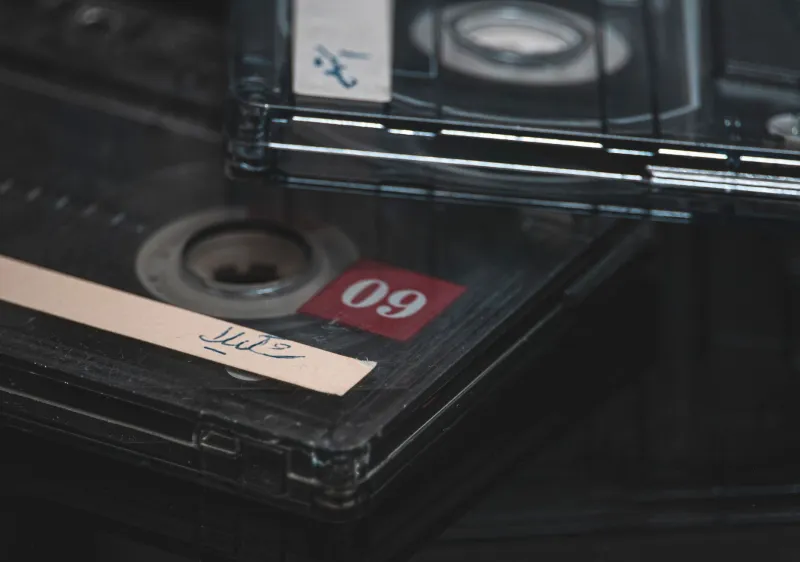
Labels are evidence. A name, a date, a station logo, a track list, a note like 'For Kim' or 'Car tape' all narrow the story. A J-card with timings and side breaks suggests intention. Do not ignore the case: the same handwriting across several tapes can identify a household collection, and a radio station sticker can place the tape in a city and era. If the tape says 'Summer 94' in ballpoint, treat that as a lead, not a fact. Cross-check it against the music, the ads, and the shell style.
Playback is a test, not a dare
Use a deck you can clean and a tape you do not love. Inspect the tape path first. If you see white fuzz, powdery residue, or smell vinegar or must, stop. Mold and binder breakdown are red flags. Isolate the tape in a zip bag, clean the deck after any contact, and do not play it again until you have advice from a conservator or an experienced tech. Do not bake cassettes. Baking is for certain reel-to-reel tapes; an oven will not fix a cassette and may ruin it.
Squealing, shedding, or a sudden slowdown can signal binder damage or a failing slip sheet. A chewed tape at the leader may be repairable; a tape that leaves oxide on the heads every time needs professional attention. If the tape plays cleanly, note the speed and channel balance. Those details will matter when you decide whether to keep or digitize.
Decode the aircheck
If the tape opens with a DJ talking over an intro, you may have a radio aircheck. These are some of the most underrated recordings in the hobby because they capture more than songs. Log what you hear: station ID, call letters, city, ads, weather, contest prizes, and song titles. Ads are often the best date codes. A commercial for a long-gone car dealership can place the recording within a year or two. Track sequencing matters too. A tape that pauses precisely between songs and catches the first second of the next one is a deliberate recording. That is culture, not just audio.
Keep, rip, or donate
Here is a practical framework.
- Keep the tape if it documents family, a local scene, or a specific radio moment; if the sequencing is clearly authored; if it plays cleanly and stores well.
- Rip it if the content matters but the tape is fragile, moldy, or unique and at risk. Digitize once at a sensible resolution, keep a raw file, and label it with the tape markings and your notes. For cassette, 24-bit/48 kHz is plenty.
- Donate it if it duplicates widely available commercial releases, or if it has local historical value and you cannot store it properly. For local radio and community recordings, a historical society or media archive may be the right home. Do not dump moldy tapes in a donation box without warning anyone.
Preservation ethics
Unknown tapes often contain private moments. Do not upload family recordings without consent. Respect copyright on commercial music and radio broadcasts. Store tapes upright, away from heat, humidity, and magnets. Keep the cases; they protect the tape and carry information. If you digitize, keep the original. The file is a copy; the object is the source. And if a tape is too damaged to play, say so plainly rather than passing the problem to the next person.
The story is the value
Not every mystery tape is a masterpiece. Some are a half-finished church service, some are a cousin's band rehearsal, and some are a commercial album with a mystery stain. The point is not to assign a price tag. It is to slow down enough to ask what the tape is, who made it, and whether it deserves another listen. Sometimes the answer is a clean case and a trip to the recycling bin. Sometimes it is a voice you have not heard in twenty years. You will not know until you look, listen, and decide with care.