Snow on the Tape: How to Make a Holiday Cassette Gift Worth Keeping
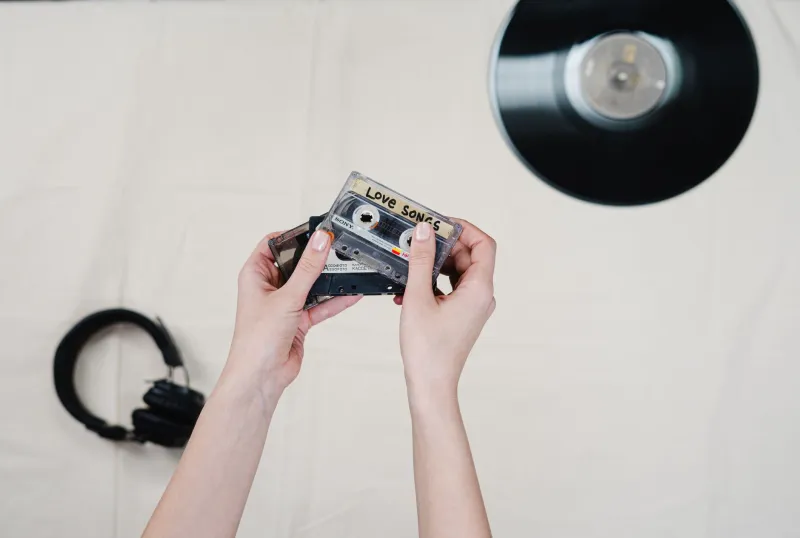
Every December, the same ritual repeats: someone opens a group chat, drops a streaming playlist link, and calls it a gift. It is not nothing. But it disappears into the same bottomless queue as every other link, sandwiched between a podcast episode and a grocery delivery confirmation. A cassette does something different. It asks for time. It has a beginning, a middle, an end, and a little plastic case that can sit on a shelf for years. If you want to give a holiday gift in 2026 that feels less like content and more like an object, a handmade mixtape is still tough to beat. Here is how to make one that is worth keeping, not just a nostalgia prop.
Start With a Person, Not a Playlist
Before you touch a tape, decide who it is for and what you want the tape to say. A holiday mixtape should not be a data dump of your favorite songs from the past year. It should be a small argument about a person, a season, or a shared memory. Maybe it is for a friend who moved to a colder city. Maybe it is for a parent who still has a boombox in the garage. Maybe it is for a partner who needs a reason to sit still for 45 minutes.
Pick a shape before you pick songs. A C60 gives you roughly 30 minutes per side, which is ideal for a focused gift. A C90 gives you 45 minutes per side, which is better for a long winter drive or a lazy holiday morning. Do not try to cram a C90 until it is full. Leave some air. A tape with breathing room feels confident. A tape with 47 tracks and no pauses feels like a panic attack in plastic.
Choose Tape Stock That Works With You
Cassette stock can be intimidating if you have not bought blanks since the 1990s. The good news is that you do not need exotic tape to make a good gift. Type I ferric tapes are the forgiving workhorses of the format. They are warm, easy to record on, and widely available. In 2026, new-production options include National Audio Company's FerroMaster line, RTM's FOX C60, and sealed Maxell or TDK Type I tapes from reputable sellers. Avoid C120s. They are thin, fragile, and more likely to jam in a recipient's deck. Stick with C60 or C90.
Buy more tape than you need. You will make mistakes. You will hit record with the levels too hot. You will forget to pause between songs. You will realize side A should have ended with the song you put second on side B. Having a spare blank or two keeps the project from becoming a stress spiral. If you are buying old stock, ask the seller whether the tapes have been stored upright in a cool, dry place. Avoid lots that smell like a damp basement or look like they have been baking in a car since the Clinton administration.
Record From Vinyl Without Losing the Mood
Recording from vinyl is not just a flex. It changes the way you listen. You have to wait for the needle to drop. You have to flip the record. You have to decide whether the crackle belongs in the gift. That pace is part of the charm.
Set up your chain simply: turntable into a phono preamp or receiver, then a line output into your cassette deck's line input. Clean the deck's heads and capstan with isopropyl alcohol and a cotton swab before you start. Let it dry. Use a sacrificial tape for your first test run, especially if the deck has been sitting unused. Set your recording levels on the loudest passage of the first song and leave headroom. On a deck with VU meters, aim for peaks around +3, not pinned into the red. On a deck with digital meters, leave a few dB of space. Do not use auto-level. You want the tape to sound like the record, not like a compressor trying to win a loudness war.
Record each side in one pass. Pause manually between tracks. Do not edit out every bit of silence. The small gaps are where the tape breathes. If you are recording from digital files, use a decent DAC into the deck and still record in real time. The point is not speed. The point is attention.
The J-Card Is Half the Gift
A cassette without a J-card is a blank in a case. A cassette with a handmade J-card is a letter with a soundtrack. You do not need design software. You need cardstock, a ruler, a pencil, and maybe a printer if you want clean tracklist text. Search for a J-card template online, print it on cardstock, and cut carefully. Leave a little extra room at the folds. Nothing ruins a handmade gift like a spine that does not fit.
Use the front for a title and an image. Use the inside for the tracklist, a short note, the date, and maybe an inside joke that only the recipient will understand. Handwrite the tracklist if your handwriting is legible. If it is not, type it and add a handwritten note anyway. Label the cassette itself with side A and side B. Add a small sticker or a strip of colored tape if you want. Keep it simple. The goal is personal, not professional.
A Practical 2026 Buying Guide
If you are starting from zero, here is a realistic shopping list. For blanks, look at National Audio Company's FerroMaster C456, RTM's FOX C60, and sealed Type I tapes from Maxell or TDK. For a recorder, the TEAC W-1200 is a solid midpriced double deck with real level controls. The Pyle PT659DU is a budget option with USB output if you also want to digitize tapes later. The Sony CFD-S70 boombox is a casual choice if you want a radio, CD player, and cassette recorder in one box. None of these are audiophile dream machines, but they can make a clean, charming mixtape.
Look for a deck with a line input, recording level knobs, and a tape type selector. Avoid USB-only converters that are designed mainly for playback or digitizing. They are fine for listening, but they are not the tool for making a gift. Test every deck with a tape you do not care about. If the speed sounds wobbly or the levels are stuck, return it.
Package It Like You Mean It
A clear cassette case is fine. A clear case with a handwritten sticker is better. Add a short card that explains why you chose the first song or what the recipient should notice on side B. If the person does not own a cassette player, pair the tape with an affordable portable player or tell them where to find one. Some local tape labels and DIY studios in the US also offer short-run dubbing if you want a helper, but the handmade route is more fun.
At Makarateyp, we like gifts that cannot be scrolled past. A playlist says I thought of you. A cassette says I sat with you for 45 minutes and made choices. That is the difference. That is the gift.