The Machine Was Listening: Editing Old Answering-Machine Tapes Into a Family Holiday Listen
Photo: vintage microcassette answering machine tapes and recorder on wooden table, via img.freepik.com
Answering machines were never meant to be archives. They were appliances that caught voices in passing: a hurried “call me back,” a birthday reminder, a wrong number, a kid reciting a phone number twice because the beep cut them off. By late 2026, most of those machines are long gone from the hallway table, but the little tapes they used are still out there in shoeboxes, junk drawers, and the bottom of plastic storage bins. The trick is not simply digitizing them. It is turning a pile of beeps, greetings, and half-finished messages into something a family can actually sit with.
First, Figure Out What You Actually Found
Answering-machine tape is a loose term. You may be looking at microcassettes, standard cassettes, or one of the odd smaller formats that lived briefly in office equipment. Microcassettes are the classic culprit: tiny shells, often with a speed switch on the machine that recorded them. Some run at 2.4 cm/s, some at 1.2 cm/s, and a tape recorded at one speed will sound like chipmunks or a slow-motion ghost at the other.
Before you play anything, sort by format and label what you can. Keep tapes out of hot attics and sunny car trunks. Do not open the shells to “see how they work.” If you spot white fuzz, visible mold, or a tape that looks wrinkled, isolate it and set it aside for a professional transfer. The goal right now is identification, not heroics.
Safe Playback for Ornery Little Tapes
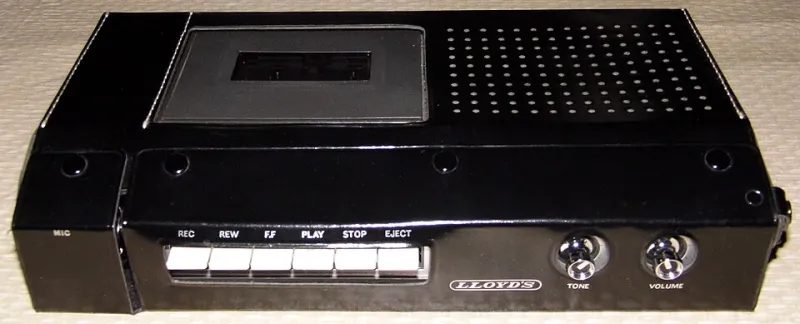
Use the right machine. A microcassette recorder or transcriber is better than a standard cassette deck with an adapter, and a deck with pitch control is better than one without. Clean the heads and pinch roller with high-percentage isopropyl alcohol and a swab, let everything dry, and test with the least precious tape in the box first. If the tape squeals, drags, or starts to curl, stop. Cheap playback can turn a fragile recording into a permanent lesson.
For standard cassettes, a working deck with a headphone output and adjustable pitch is ideal. For microcassettes, check the speed switch before you press play. Listen on headphones first, not through a room speaker, so you can hear dropouts and speed problems early. Take notes on the machine settings for each tape. Future-you will not remember which switch was up.
The Transfer Is Boring, Which Is Good
A clean transfer does not need to be fancy. Run a line or headphone output into an audio interface, record in mono at 24-bit and 48 kHz, and set levels conservatively. Peaks around -12 to -6 dB are fine. Capture the whole side, including the outgoing greeting, the beep, dial tones, silence, and the awkward hang-ups. Those artifacts are part of the texture, and you can always trim later.
Save the raw files with clear names and back them up in two places. Keep a timecode log as you listen: tape number, approximate time, who is speaking, and what is happening. Light noise reduction can help a listening copy, but keep the unprocessed file as the archive. In 2026 we have plenty of cheap storage; what we do not have is another original tape.
The Ethics of Other People’s Voices
These recordings belong to the people who made them, and to the families who remember them. Before you circulate a finished piece, talk to living relatives. Ask whether anyone would be hurt, embarrassed, or surprised by what you plan to use. Exclude medical details, arguments, and private messages that were never meant for a group audience. A family holiday listen is not the same as a public podcast.
Context matters, too. A short spoken or printed note explaining where the tapes came from, roughly when they were recorded, and who agreed to share them keeps the project honest. If someone asks to be left out, leave them out. The point is remembrance, not ambush.
Build an Index Before You Build a Mix
Make a simple log before you start editing. A spreadsheet or a notebook works: tape ID, timecode, speaker, a few words of the message, and a note on tone. Mark the greetings, the funny cutoffs, the recurring phrases, and the messages that make everyone go quiet. You do not need a full transcript. You need enough of a map to find the good parts twice.
This is also where you decide what the project is. Is it a holiday tape for the family table? A private listen for one relative? A short piece for a reunion? A 45-minute voicemail dump is not a listening experience. A focused 20-minute collage can be.
Sequence Like a Conversation, Not a Dump
Try three loose movements. Start with greetings and everyday check-ins: the machine voice, a familiar hello, a message about nothing much. Move into stories, interruptions, and the odd comedy of early answering machines. End with holiday calls, long sign-offs, or the messages that carry more weight now than they did then. Use beeps and brief silences as punctuation instead of filling every gap.
Keep the voices front and center. If you add music, keep it sparse and low, and only between sections. Make a simple tracklist with first names or labels, not full addresses or private details. For a gift, a handwritten j-card and a one-page note will do more than a flashy digital menu. The machine was listening; now the family gets to listen back, together, on purpose.