Shrink Wrap Isn’t a Time Machine: A Tape Buyer’s Guide to ‘New Old Stock’
There’s a certain romance to a cassette still in its wrapper. It feels like a tiny time capsule: the cellophane, the crisp J-card, the shell that has never met a deck. That romance is exactly why the phrase ‘new old stock’ gets used so loosely. In the cassette world, NOS is less a grade than a story. Sometimes it’s true. Sometimes it’s a zip bag and a hopeful seller.
If you collect tapes to play, dub, display, or trade, the goal is not to become paranoid. It’s to slow down enough to tell the difference between factory-sealed vintage stock and old inventory that has been cleaned up, rewrapped, or relabeled. You’re buying the tape, not the adjective.
What ‘New Old Stock’ Is Supposed to Mean
In plain retail terms, new old stock is unsold inventory from a store, distributor, or warehouse. It was never sold to an end user, but it is still old. That last part matters. A sealed cassette from a hot attic is not the same as a sealed cassette from a climate-controlled record shop. NOS tells you something about the chain of custody, not necessarily about playability, mold, lubricant condition, or tape pack.
Sellers often blur this. ‘NOS condition’ is not the same as NOS. ‘Sealed’ can mean factory wrap, a seller’s poly bag, or a heat gun and a dream. ‘Looks unplayed’ usually means the seller looked at it and guessed. None of those phrases are grading standards. Treat them as conversation starters, not proof.
The Shell Is the First Witness
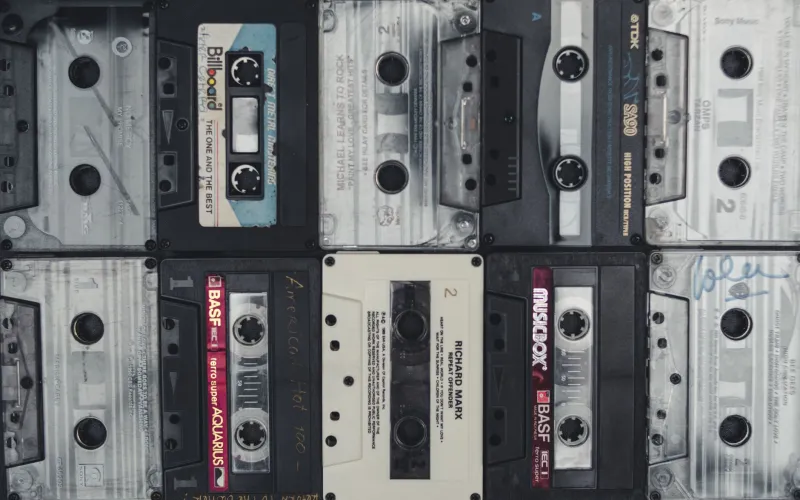
Before you fall for the wrapper, ask for shell photos. Factory cassette shells usually carry molded manufacturer marks, country of origin, formulation codes, and sometimes date stamps. A TDK shell should look like a TDK shell. A Maxell J-card paired with a no-name shell is not automatically fake, but it is a reason to ask questions.
Genuine old stock often has consistent labeling: the shell label lines up with the window, the print is clean, and the color matches the era. Repackaged or relabeled tapes often show bubbles, crooked labels, adhesive residue, or a label that looks brighter than the J-card. That said, factories were not always perfect. Use shell codes and label quality as a pattern of clues, not a single gotcha.
Wrapper Seams and the Shrink-Wrap Tell
Factory cassette wrap was often loose cellophane with folded seams at the corners and a tear strip. It did not always look like modern retail shrink wrap. Repackagers tend to use tighter heat shrink that hugs the case, with seams down the middle or back and corners that look almost too crisp. If the wrap looks like it came off a big-box CD, be suspicious.
Look for what is under the plastic, too. Old store stock may have a price sticker on the wrap or a faded sticker on the case. A fresh sticker over an old sticker is a clue. A seam that runs through the middle of the spine is another. None of these details is conclusive on its own, but together they tell a story. Ask for close-ups of the corners and the back seam before you pay a sealed premium.
J-Card Printing and the Age of Paper
J-cards are where a lot of repackaging gets sloppy. Factory printing from the cassette era was usually offset, with crisp type, consistent color, a catalog number, copyright lines, and spine text that lines up. A modern laser or inkjet reprint can look slightly soft, with uneven cuts, too-bright paper, or no bleed at the edges.
Paper ages, but not always in the same way. Some old J-cards yellow. Some stay bright because they lived in a case. The trick is to compare the J-card to the shell and the listing. If the J-card says one country and the shell says another, ask why. If the spine text is crooked or the catalog number is missing, price it as a used tape, not a collectible sealed one.
Seller Language: Read the Weasel Words
Most NOS confusion lives in the listing copy. ‘Warehouse find’ sounds romantic, but it can mean a damp basement. ‘Old store stock’ is meaningful only if the seller can explain the store. ‘Mint in shrink’ is not a grade. ‘Rare’ is not a condition. ‘Vintage’ is a decade, not a promise.
Ask direct questions: Where did the tape come from? Can you show the shell codes, the wrap seams, the J-card spine, and the tape pack? Do you accept returns? A seller who deals in tapes will usually answer. A seller who is flipping a box from an estate sale may not. On eBay, check feedback for tape buyers and look for listings that show the actual item, not a stock photo. At a flea market, cash is fine, but only after you have inspected the goods.
When the Premium Makes Sense
A genuine NOS cassette is worth a premium when the object itself matters. Collectible sealed blanks from known formulations, factory-sealed pre-recorded albums with cultural value, or oddball shells that look good on a shelf can justify extra money. Even then, buy it as an object first. Sealed old tape can still have mold, binder issues, or a tape pack that has settled badly.
For everyday recording and dubbing, a clean used Type II tape is often the smarter buy. You can inspect it, test it, rewind it, and see how it behaves. A used tape from a smoke-free home with a good shell and an honest J-card will usually outperform a mystery ‘sealed’ tape from an attic. If you are paying more than a modest premium for a common blank, you are probably buying the story, not the tape.
A Parking-Lot Checklist
At the flea market, feel the wrap. Check the seams. Look for a label under the plastic. Ask to see the spine and the shell. Look through the window for mold or a loose tape pack. If the seller will not let you inspect it, pass. Online, request photos of the shell, spine, wrap corners, and back J-card. Pay with buyer protection when you can. And test any old tape on a cheap deck before it goes near your good machine.
Bottom Line
NOS is provenance, not a guarantee. A clean used tape with honest wear beats a mystery wrapped in plastic. If the story checks out and the price is fair, enjoy the time capsule. If the seller only has adjectives, leave it in the bin.