Aisle Audiophile: Testing a Cheap Secondhand Cassette Deck Before It Follows You Home
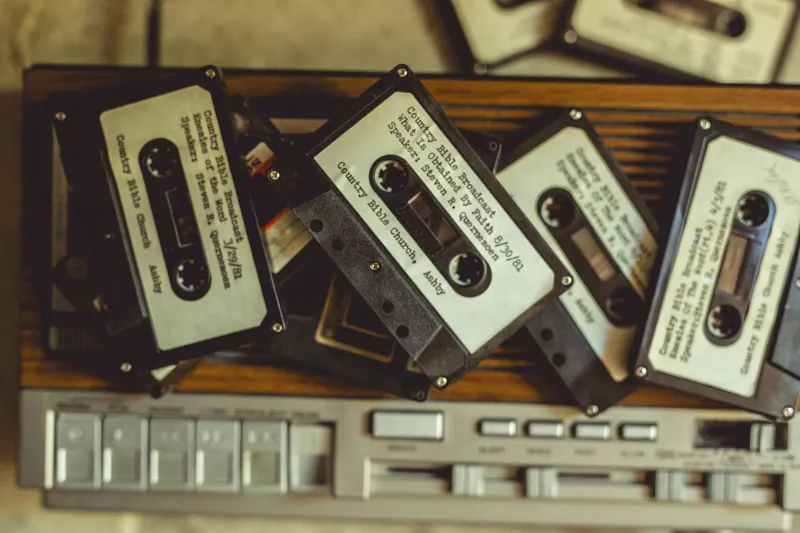
The cassette revival has done strange things to prices, but the bottom of the market is still alive. In 2026, a sub-$40 deck is not a fantasy — it is a Tuesday afternoon at Goodwill, a church rummage sale, or the back table of a flea market where the seller says “it powers on” with the confidence of a man who has never pressed Play. The trick is not finding a cheap deck. The trick is finding one that will still be worth owning after you get it home.
Bring a Kit, Not Hope
A thrift-store cassette deck is a blind date with a motor. You need evidence, not vibes. Pack a small bag before you leave the house:
- A known-good test tape. Not a mystery cassette from the same bin. Use a commercial tape you have played recently, or a blank you recorded yourself with a mix on one side and a steady spoken count on the other. You want to know what the deck is supposed to sound like.
- Headphones and a 1/4-inch adapter. Most decks have a phone jack. Some only have line out. Bring a pair anyway; it is the fastest way to catch a dead channel.
- Fresh batteries if you are shopping portables. D cells, usually. A portable that only works with a missing proprietary AC adapter is a paperweight with a handle.
- A small flashlight. You need to see the capstan, the pinch roller, and the belt path through whatever window the deck gives you.
- A cotton swab or two. Not to clean the store’s merchandise, but to dab at a belt or check for goo. Ask first. Some shops are touchy about wet items.
- A phone note or a piece of paper. Write down the model number. Ten minutes of research in the parking lot beats an hour of regret on the drive home.
Call ahead if you can. Some thrift stores have a testing station; some have a strict no-plug-in policy. If the shop will not let you power up a deck, walk. There will be another one next weekend.
The Ten-Second Power Check
Before you even insert a tape, plug the deck in and listen. Press Power and stand still. You are listening for motor rumble, a hum that changes with the volume knob, or the click of a relay that never stops clicking. Open and close the cassette door. Does it feel like a hatch or a trap? Press Play with no tape inside and watch the capstan spin. It should turn smoothly and quietly. If the capstan wobbles, if the motor shrieks, or if the deck smells like hot dust and ozone, set it down gently and back away.
Check the VU meters. Do they rest at zero? Do they twitch when you tap the case? A pinned meter is not always fatal, but it is a bargaining chip. Look at the power cord. If it is missing and the deck uses a proprietary plug, price that in immediately. A $25 deck with a $30 power supply is a $55 deck.
The Tape That Tells the Truth
This is the part most people skip. Put your test tape in. Press Play. Listen through headphones, not through the store’s tinny demo speaker. You are checking for three things: pitch stability, channel balance, and mechanical drama.
Pitch stability is wow and flutter. A little drift on a piano note is normal for a cheap deck. A warble that makes you seasick is not. Channel balance is simple: does the left headphone hear the left side of the mix? If one channel is dead or crackly, it might be a dirty head or a bad capacitor. It might also be a cracked solder joint, and you will not know until you are home with a screwdriver.
Then run the transport. Fast-forward to the end of the side. Rewind to the start. Does it slow down, stop, or grind? Press Pause. Does it release cleanly? Tap the counter. Does it reset? Try a second tape if you have one, especially if the first tape is thin C-90 stock. A deck that eats a C-60 may still choke on a C-90, and holiday mixtapes are usually C-60s and C-90s.
Red Flags That End the Conversation
Some problems are cosmetic. Some are a weekend project. Some are a sign that the deck has lived a hard life and wants to retire.
- Belt melt. If you see black tar through the cassette door or along the seam, the belt has turned to goo. That is common and fixable, but it means the deck has been sitting somewhere hot for a long time.
- Capstan wear. Shine the flashlight on the capstan shaft. Deep grooves, rust, or a visible wobble are bad news. A polished capstan is fine; a scored one will chew tapes.
- A hard, shiny pinch roller. It should feel like rubber, not like a pencil eraser that has been left in the sun. Cracked or glazed rollers cause tape skew and dropouts.
- A dead channel that follows the tape. If the same channel dies on two different tapes, the deck has a problem. If it only happens on one tape, the tape is the problem.
- Mechanical crunch. Cracked gears and worn idler tires are common in 1980s and 1990s decks. Some are repairable; many are not worth the parts hunt.
- “Just needs a belt” pricing. Sometimes that is true. Sometimes it is a prayer. Price the deck as if the belt is only the first problem, because it usually is.
When Cleaning and Belting Makes Sense
A cheap deck becomes a good deck when the heads are solid, the transport is stable, and the electronics are quiet. Cleaning is the easy part: 90% isopropyl alcohol on a cotton swab, gentle pressure on the heads, capstan, and pinch roller. Let it dry. Do not drown the mechanism. A belt kit for a common model usually runs $10 to $20 and takes 30 to 60 minutes if you are patient and have a small screwdriver. A deck with a direct-drive motor and a heavy flywheel is often a better bet than a lightweight plastic unit with a cracked gear train.
But be honest about your skills. If you are buying a holiday gift for someone who will not open the case, a project deck is a bad gift. Buy the tested one, or buy a cheap deck and include a recorded mixtape so the recipient has something to play while you explain why the belts are on order.
The Holiday-Gift Math
A $30 deck, a $15 belt kit, and $8 of cleaning supplies is $53 and a Saturday. That is a fine deal for you or for a friend who likes tinkering. For a non-tinkerer, spend a little more or look for a deck that already plays both channels cleanly. The best thrift-store find is not the prettiest one. It is the one that makes a tape sound like music before you pay for it.
Bring the tape. Bring the headphones. Bring a little skepticism. The aisle is a test bench, and the deck only gets one chance to impress you.