The Price Tag Remembers: Reading Old Blanks Like a Receipt From Another Decade

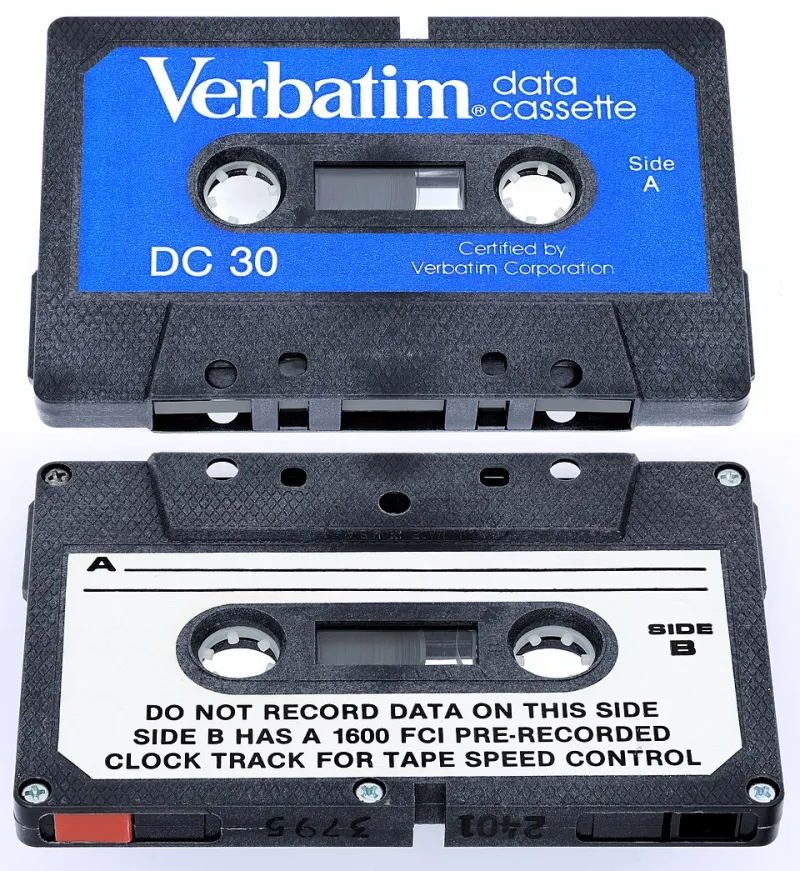
Photo: Shixart1985, CC BY 2.0, via Wikimedia Commons
A blank cassette with a faded sticker on the wrap is not just a blank cassette anymore. It is a receipt from another decade, glued to plastic. The sticker may say $2.49, or 3 for $5, or bear the stamp of a drugstore that closed before the Berlin Wall came down. For collectors, that little rectangle of gummed paper can be more revealing than the tape itself — if you know how to read it.
Here at Makarateyp, we tend to treat blanks as working objects first and artifacts second. But the price tag sits right at the intersection of both. It tells you what a recording session cost, where the tape entered the stream of daily life, and how seriously the buyer took the purchase. It also asks you to slow down before you peel it off.
The Sticker Is the Story
Vintage blank tapes carry several kinds of labels. There is the printed retail sticker: a price, a SKU, sometimes a store name. There is the handwritten mark: a date, initials, a budget note like 2.99 + tax, or a simple X to mean sold. And there is the store stamp, often from a local electronics shop, campus bookstore, or regional chain that once anchored a strip mall.
In the US, those markings map a retail landscape that has mostly vanished. A RadioShack tag from a mall in Ohio reads differently than a handwritten price from a record shop in Austin or a grocery-store sticker from a small town in the Carolinas. The tape inside may be identical — a TDK D, a Maxell UR, a Realistic — but the sticker locates it in a specific economy. It says who sold blanks, who bought them, and what a few dollars meant to that household.
A Dollar in 1987 Is Not a Dollar in 2026
The fun part is the math, as long as you keep it rough. A standard 90-minute blank that sold for $2.49 in the late 1980s would represent roughly $7 in 2026 purchasing power, depending on which inflation measure you use. A premium Type II that cost $4.99 might feel like about $14 today. A metal tape at $8.99 could land near $25 in modern money. These are not exact conversions; they are conversation starters.
That context changes how you see a old price. A three-pack for $4.99 was not automatically a bargain. For a teenager dubbing albums off a friend's CD player, it was a real budget line. For a family recording church services or road-trip mixtapes, the tape had to be reused until the screws stripped. The sticker turns a piece of media into a small financial decision.
Handwriting Is Provenance, Not Decoration
The most meaningful labels usually combine several details. A price sticker from a known regional retailer, a handwritten date within the tape's production era, and a J-card that matches the handwriting can form a believable chain. A name, a city, a radio station call sign, or a note like dubbed from LP can add texture without turning the tape into a museum piece.
Ordinary wear is different. Scuffed shells, sun-faded J-cards, and sticker residue are condition issues. They matter for playability and display, but they are not provenance by themselves. A price tag becomes meaningful when it answers a question: where was this bought, when, and by whom? If the tag only says $1.99 and the tape is a common late-1990s blank, it is still charming — just not valuable.
Document First, Remove Almost Never
If you want to preserve the evidence, start with photographs. Shoot the front and back of the case in raking light so the sticker texture, handwriting, and any store stamp are legible. Include a scale or a coin for size if you are cataloging a collection. Note the price, retailer, date, shell color, tape length, and any handwritten text in a spreadsheet or notebook.
Then leave the sticker alone. Solvents, scraping tools, and heat can lift print, warp shells, or bleed adhesive into porous J-card paper. A hair dryer is not a conservation tool. If a sticker is flaking, place the cassette in a clean poly sleeve and handle it by the edges. Store J-cards flat and away from direct sun. If you must remove a loose sticker from a plastic case, do it with patience and no liquid near the paper — but honestly, the safer choice is to let it stay.
What It Means at the 2026 Table
In today's collector market, a price tag adds a small premium when it supports a story. It does not turn a common blank into a rare one. Buy the tape for its condition, its shell, and its recordability; enjoy the sticker as a bonus. A 2026 shopper flipping through an estate-sale box should look for tags that match the era of the tape, not just tags that look old. A 1980s sticker on a 1990s shell is a mismatch worth noticing.
The price tag remembers what the catalog cannot. It remembers the drugstore spinner rack, the mall electronics aisle, the cash-only record shop, and the careful decision to spend a few dollars on something recordable. That is a modest kind of history, but it is the kind tape collectors actually hold in their hands.